
Jobber Lead Follow Up Automation That Books
A lead comes in at 8:47 p.m. The office is closed. By 8:52, that homeowner has already called someone else.
That is the real cost behind Jobber lead follow up automation. It is not about saving a few admin minutes. It is about what happens in the gap between interest and response - especially for home-service companies where speed decides who books the job.
If you run a plumbing, HVAC, electrical, roofing, or landscaping business on Jobber, you already have a solid operating system for quoting, scheduling, and customer management. But Jobber alone does not fix the follow-up problem. Leads still go cold. Estimates still sit. Missed calls still turn into lost jobs. Automation matters because the revenue leak usually starts before dispatch ever gets involved.
Where Jobber lead follow up automation actually helps
Most owners think of follow-up as a front-office discipline issue. Somebody forgot to text back. Somebody got busy. Somebody meant to call that estimate later and never did. That does happen. But once your business is doing seven or eight figures, the problem is usually structural, not personal.
Your team is juggling inbound calls, scheduling changes, callbacks, technician questions, invoices, and angry customers whose AC went out on the hottest day of the week. In that environment, lead follow-up becomes inconsistent by default. Good people still miss things.
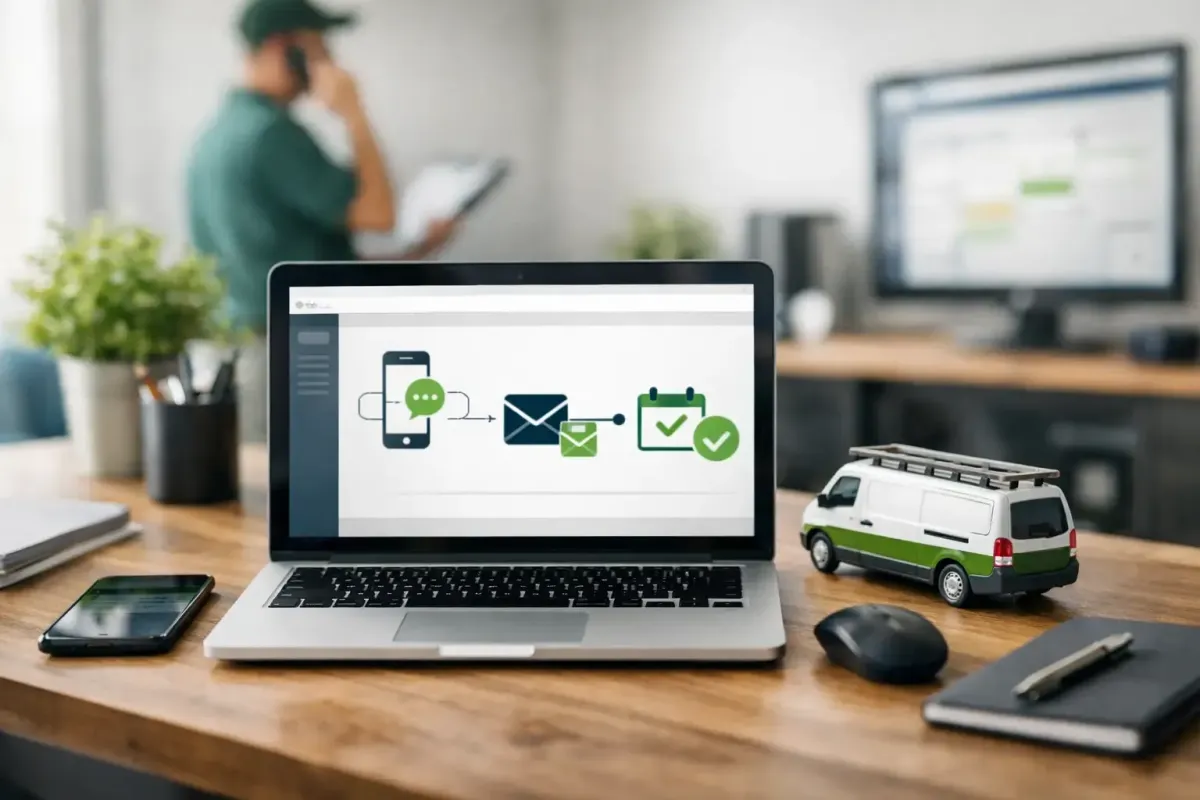
Jobber lead follow up automation helps by removing the need for someone to remember every next step. A new inquiry can trigger an immediate text. Amissed callcan start a response sequence. An unsold estimate can move into a timed re-engagement flow. The point is not to replace judgment. The point is to make sure no lead disappears just because the day got messy.
For home-service operators, that changes more than close rate. It stabilizes booking volume. It reduces wasted ad spend. It gives the office a cleaner pipeline instead of a pile of half-finished conversations.
The biggest revenue leaks happen after first contact
Many businesses assume the hard part is generating leads. In reality, a lot of expensive demand is already in the system and simply not being worked well enough.
A homeowner fills out a form during lunch and gets no answer until the next morning. A missed caller gets added to Jobber, but no one reaches back quickly. An estimate goes out on Thursday and sits untouched for ten days. None of those are dramatic failures. They are normal operational misses. They also add up to serious revenue loss over a month.
This is where automation needs to be practical, not flashy. Fast acknowledgment matters first. Then qualification. Then booking. Then reminder and confirmation so the appointment actually holds. If the lead does not book right away, the next best move is not a dead end. It is a structured follow-up cycle that keeps the conversation alive.
That cycle works especially well in trades where timing and urgency vary. A burst pipe lead needs a different pace than a fall furnace tune-up. A high-ticket roofing estimate needs a different sequence than a simple electrical repair. Good automation accounts for those differences instead of blasting every lead with the same generic message.
What a good follow-up system inside a Jobber workflow looks like
The best setup is usually simple from the owner's point of view. The moment a lead comes in or a call is missed, the system responds right away. It asks the right qualification questions, routes the opportunity properly, and pushes toward a booked appointment.
If the customer is not ready, follow-up continues across text, email, or voice based on the type of job and the timing. If an appointment is booked, confirmations and reminders reduce no-shows and day-of confusion. If an estimate goes cold, it re-enters the pipeline later with context instead of getting forgotten.
Jobber stays the source of truth for the customer record, job details, and schedule. Automation handles the consistency your office cannot maintain manually at scale.
That last part matters. Most companies do not need another dashboard. They need fewer dropped balls.
What to automate first and what to leave alone
Not every touchpoint should be automated at once. That is where a lot of setups go sideways.
Start with the moments where speed and consistency matter most: missed call response, new lead acknowledgment, estimate follow-up, appointment confirmation, and reactivation of old leads. Those are high-frequency, high-impact parts of the revenue cycle. They are also the easiest to standardize.
Leave room for human involvement when the job is complex, the customer has unusual requirements, or the opportunity is large enough that personal handling improves the close. A commercial electrical project, a major repipe, or a multi-system HVAC replacement often needs more nuance than a standard follow-up sequence can provide on its own.
The right answer is usually hybrid. Automation handles the first response and the persistence. Your team steps in where expertise and judgment move the deal forward.
Why speed matters more in the trades than most owners realize
In home services, the customer is rarely doing deep vendor research. They want confidence, clarity, and a fast next step. Whoever responds first with something useful usually earns the conversation.
That does not mean every lead should be pressured into booking immediately. It means silence is expensive. Even a short response that says, in effect, we got your request and here is the next step, buys time and keeps attention. Waiting an hour can feel harmless inside the office. To a homeowner with no heat, it feels like you vanished.
This is why after-hours coverage is such a big factor in Jobber lead follow up automation. A lot of revenue slips out when the phones roll to voicemail at night, on weekends, and during peak dispatch windows. The business may look fully staffed on paper and still lose work when nobody can respond in the moment.
Automation should improve the customer experience, not make it colder
Owners are right to be skeptical here. Bad automation sounds canned, asks clumsy questions, and makes people repeat themselves. That kind of system creates friction instead of bookings.
Good follow-up feels direct and helpful. It confirms the issue, gathers only the information needed, and moves the customer toward the calendar. It sounds like someone who understands how these jobs work.
That is especially important in the trades. A homeowner asking about a sewer backup, a failing condenser, or a leaking panel is not looking for a marketing sequence. They want someone who sounds competent. If automation cannot reflect that, it should not becustomer-facing.
This is where anagentic systemcan make a real difference. Instead of sending the same fixed message every time, it can respond based on the job type, timing, and stage in the pipeline. That creates a better experience and a better operating result. Effiqo was built around exactly that problem - not adding noise, but covering the revenue work that falls through when the team is stretched.
How to tell if your current follow-up is costing you jobs
You do not need a formal audit to spot it. Look at your missed calls. Look at how long new leads sit before first contact. Look at estimates sent versus estimates revisited. Look at how often office staff are forced to choose between serving today's schedule and chasing yesterday's demand.
If your answer to follow-up depends on who was on shift, how busy dispatch got, or whether somebody remembered to check a spreadsheet, then the system is fragile. If marketing is producing leads but booking is still uneven, the problem is usually not top-of-funnel. It is handoff and follow-through.
A healthy setup creates a consistent path from inquiry to appointment, and from estimate to re-engagement if the first answer is no. That is how you get more value from the leads you already paid for.
The real goal is not automation - it is fewer lost opportunities
Owners do not wake up wanting automation. They want a fuller board, fewer cancellations, better use of ad spend, and a business that does not depend on heroic office effort every day.
Jobber lead follow up automation is worth doing when it gives you that. Not when it adds another layer of software for your team to manage. The measure is simple: are more leads getting contacted fast, qualified properly, booked consistently, and revisited when they go quiet?
When the answer is yes, the office gets calmer. Revenue gets less fragile. And growth stops depending on whether someone remembered to make one more call before heading home.
The best systems are the ones your customers notice as responsiveness and your staff barely notice at all.


